
Glass Door Lock Orders: Define Each Supplied Piece
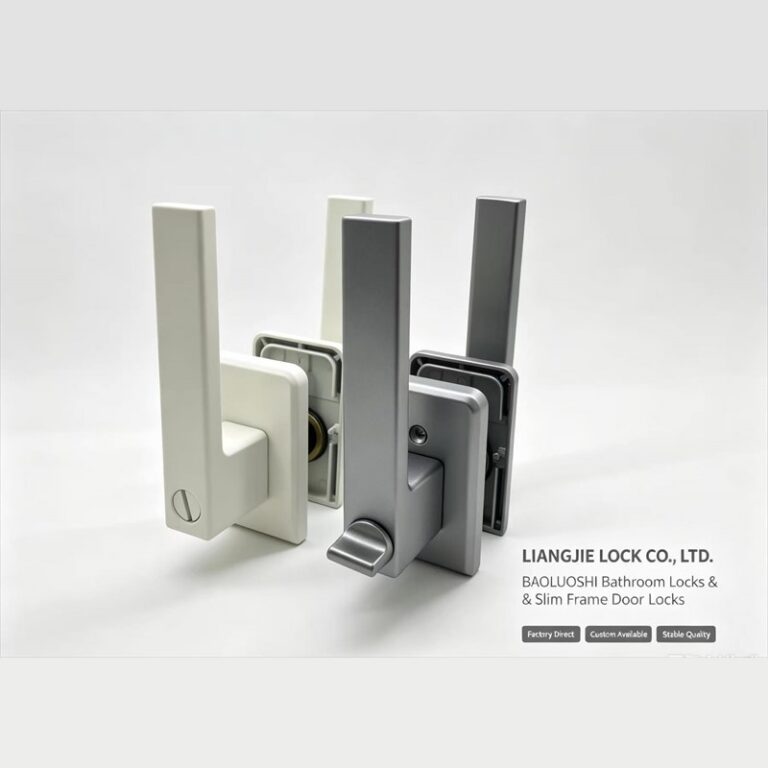
For a glass door lock order, ask the supplier to define one quoted supply unit with an illustrated parts schedule. Identify the selected assembly and list each included piece, optional component and excluded item. Link the schedule to the exact version and sample. Several assemblies in a catalogue photograph should not be counted as the contents of one package.
Start with one identified catalogue version
Liangjie Locks lists an Aluminum Alloy Glass Door Lock and uses a product-card photograph containing several handle assemblies. The first purchasing task is to identify which assembly the supplier is offering. A grouped image can show alternatives rather than a complete package. Mark the intended reference clearly and ask the supplier to name the corresponding offered version.
Treat the catalogue name as a reference for the inquiry. It does not independently verify material composition, the correct application for a particular door or the exact contents of an order. If those matters affect the purchase, place them in separate confirmation fields. A clear version reference gives the supplier a defined starting point for answering the supply-scope questions.
Define what the quotation means by one set
The word set needs a written definition. Ask whether the quotation covers a particular handle assembly, a pair of visible elements or another stated combination. Do not determine the count by the number of objects in a photograph. Request a supplier-marked image or parts list describing the exact commercial unit behind the quotation.
Use separate rows for each item the supplier confirms as included. If the inquiry calls for associated hardware, name it explicitly and ask whether it is supplied with this version, quoted separately or outside the offered scope. The same principle applies to small fittings that may not be visible. Their absence from a photograph does not prove exclusion, and their presence elsewhere in a catalogue does not prove inclusion.
Compare inclusions before comparing totals
Two quotations with the same short product name may describe different supply units. A comparison should show those differences before the buyer compares commercial totals. Keep an unanswered inclusion question visible rather than converting it into an assumption. Use the supplier’s confirmed descriptions in the final comparison.
Schedule field | Question to resolve | Quotation comparison rule
Selected version | Which pictured assembly is offered? | Match the same version reference
Quoted supply unit | What does one set contain? | Compare the same defined unit
Visible components | Which pieces are included? | Retain the marked parts schedule
Associated hardware | Included, separate or excluded? | Keep optional scope on separate lines
Package identification | How is the selected version identified? | Use the agreed product reference
Keep alternatives outside the base supply list
When a catalogue photograph shows several colours or arrangements, ask whether they are alternatives, examples or a mixed assortment offered for purchase. A buyer seeking one version should not receive an ambiguous quotation for the pictured group. If a mixed order is intended, state its proposed allocation and request an explicit supplier response for each version.
Handle any alternative component in the same way. Ask the supplier to identify the base item and the proposed alternative separately, then explain whether choosing the alternative changes the rest of the supply schedule. Do not assume that similar-looking parts can be interchanged. Compatibility and inclusion are separate questions, and both need an order-specific response when an alternative is proposed.
Use a sample to reconcile the commercial description
When a sample is provided, check it against the confirmed schedule rather than against a general catalogue photograph. Record the sample reference and ask the supplier to explain any difference between the sample and the quoted supply unit. A display sample may not establish the packaging or accessory scope of the eventual order unless the supplier confirms that relationship.
If an item is shown only as a demonstration, label it accordingly in the purchasing record. If the supplier offers additional hardware, retain the proposal without treating it as an automatic inclusion. This makes the sample review useful for commercial scope while leaving material identity, door suitability and any required technical evidence to their own confirmed records.
Make the order and receiving description agree
Use the approved supply-unit description in the purchase order. Keep the illustrated schedule, version reference and agreed exclusions with that description. Ask the supplier how it proposes to identify the version on its packing documents or packages. Record the agreed method rather than promising a particular labelling or packing service on the supplier’s behalf.
The receiving team should know which confirmed pieces belong to the selected unit and which items were ordered separately. If the supplier revises the scope, request a revised schedule before the order description is updated. This avoids a familiar disagreement: one team checks a photographed display group while another expects the narrower combination described in the quotation.
• Identify one offered version before counting pieces.
• Define the quoted supply unit in writing.
• Separate included, optional and excluded components.
• Keep the sample and quotation linked to the same schedule.
Frequently asked questions
Does a photograph with several handle assemblies show one package?
Not necessarily. Ask the supplier whether the image shows alternatives, a display group or an offered assortment. The quotation should identify the selected version and define its supply unit separately.
Should keys or other associated hardware be assumed included?
No. If an associated item matters to the purchase, ask the supplier to place it on the confirmed schedule or identify it as separate or excluded. Do not transfer accessory assumptions from another product family.
Can the same parts schedule cover every colour shown?
Only if the supplier confirms that the supply scope is the same for those identified versions. Keep the colour or appearance reference separate, and request an updated schedule when the offered assembly changes.
What is the practical benefit of an illustrated schedule?
It connects the supplier’s words to identifiable pieces and helps purchasing and receiving use the same definition of one unit. It does not replace technical suitability review, material documentation or other order-specific requirements.
Product and contact references
Glass door lock catalogue reference: https://ljlocks.com/product/aluminum-alloy-glass-door-lock/
Related slim-door lock catalogue: https://ljlocks.com/products/?product_filter=%e9%93%9d%e5%90%88%e9%87%91%e6%9e%81%e7%aa%84%e9%97%a8%e9%94%81
Contact Liangjie Locks: https://ljlocks.com/contact/
Liangjie Locks blog: https://ljlocks.com/blog/